What’s the Difference Between a Sprain, Strain, and Fracture?

If you twist your ankle during a run, feel sudden pain in your back after lifting, or suffer a hard fall, it can be difficult to know whether you’re dealing with a sprain, a strain, or a fracture. While these injuries may seem similar, they affect different parts of the body and require different treatments. Understanding the difference can help you take the right next steps toward recovery.

Sprain: Injury to a Ligament

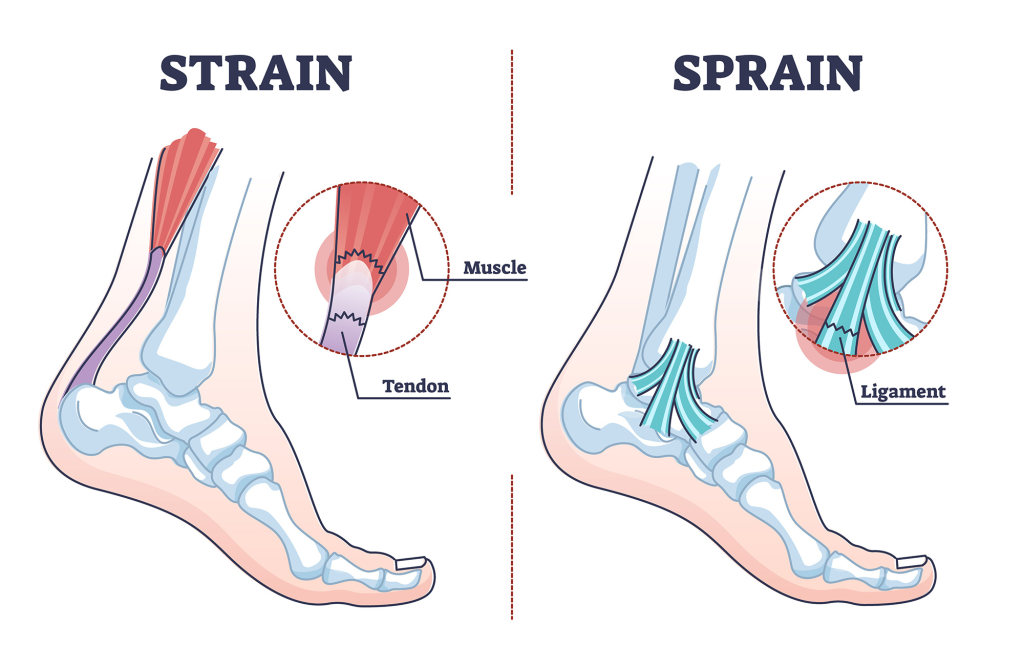
A sprain occurs when a ligament—the tough band of tissue that connects bones—is stretched or torn.

Common causes:

  • Rolling an ankle
  • Falling on an outstretched hand
  • Sudden twists during sports

Symptoms of a sprain:

  • Pain around the joint
  • Swelling and bruising
  • Limited movement or instability

Most common areas: ankle, wrist, knee.
Strain: Injury to a Muscle or Tendon

A strain affects muscles or tendons, the tissues that connect muscles to bones.

Common causes:

  • Overstretching a muscle
  • Lifting something too heavy
  • Repetitive overuse during exercise or work

Symptoms of a strain:

  • Muscle pain or cramping
  • Weakness in the affected area
  • Swelling or spasms
  • Trouble moving the muscle normally

Most common areas: lower back, hamstring, shoulder

Fracture: A Break in the Bone
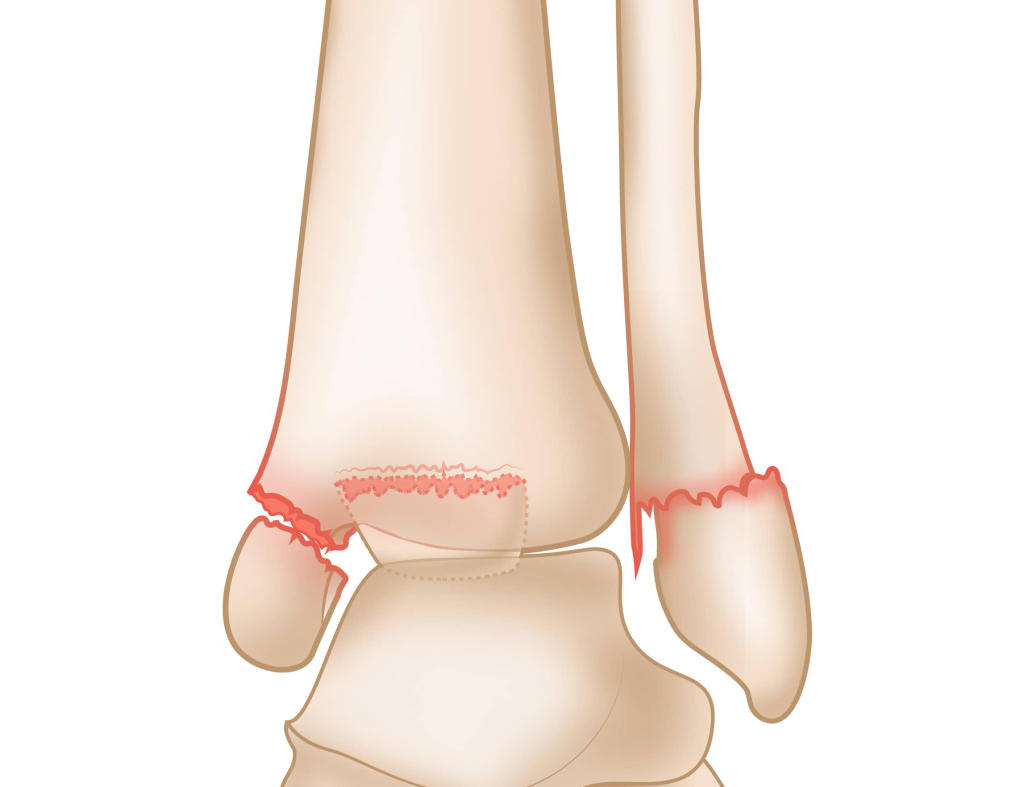
A fracture is a medical term for a broken bone. It can range from a small crack to a complete break.

Common causes:

  • Falls
  • Sports collisions
  • Car accidents
  • Severe twisting injuries

Symptoms of a fracture:

  • Intense, sharp pain
  • Swelling and bruising
  • Visible deformity (bone may look out of place)
  • Inability to bear weight or move the limb

Fractures usually require immediate medical attention.

How to Tell the Difference

While sprains and strains may heal with rest, ice, compression, and elevation (the R.I.C.E. method), fractures often require immobilization or even surgery. Here’s a quick comparison:

InjuryTissue AffectedSymptomsSeverity
SprainLigamentsSwelling, bruising, joint instabilityMild–severe
StrainMuscles or tendonsPain, spasms, weakness, limited movementMild–severe
FractureBoneSharp pain, deformity, inability to moveModerate–severe

When to See an Orthopedic Specialist

Seek professional care if you experience:

  • Severe or worsening pain
  • Inability to put weight on the limb
  • Noticeable deformity
  • Numbness, tingling, or loss of function

An orthopedic specialist can perform X-rays or imaging to determine whether your injury is a sprain, strain, or fracture—and recommend the right treatment for a safe, effective recovery.

Sprains, strains, and fractures share similar symptoms, but they affect different parts of your musculoskeletal system. If you’re unsure about your injury, don’t wait—early diagnosis is key to avoiding long-term complications.

At Montefiore Einstein Orthopedic Surgery, our orthopedic team is here to help you heal and get back to the activities you love. Contact us today to schedule an appointment.

Taking Control: A Practical Guide to Managing Arthritis 

Living with arthritis can feel like a daily balancing act—juggling pain, stiffness, and fatigue while trying to maintain a fulfilling, active life. Whether you’re newly diagnosed or have been managing arthritis for years, understanding how to take control of your condition is essential. Here’s a practical guide to help you manage arthritis and improve your quality of life. 

Understand Your Arthritis 

Arthritis isn’t just one disease—it’s a broad term that covers over 100 conditions affecting joints, muscles, and connective tissue. The most common types are: 

  • Osteoarthritis (OA): Degenerative joint disease, often age-related. 
  • Rheumatoid Arthritis (RA): An autoimmune condition that causes joint inflammation. 
  • Psoriatic Arthritis: Related to the skin condition psoriasis. 
  • Gout: Caused by excess uric acid forming crystals in joints. 

Knowing your specific type of arthritis helps tailor your treatment plan more effectively. 

Stay Active—Smartly 

Exercise is crucial, even when joints are stiff or painful. The key is to move without overdoing it: 

  • Low-impact options: Swimming, walking, cycling, and yoga are gentle on joints. 
  • Strength training: Builds muscle to support joints. 
  • Stretching and flexibility exercises: Help maintain range of motion. 

Start slow, listen to your body, and consider working with a physical therapist. 

Eat for Joint Health 

A balanced diet can reduce inflammation and improve energy. Aim for: 

  • Anti-inflammatory foods: Leafy greens, berries, fatty fish (like salmon), nuts, and whole grains. 
  • Limit: Sugar, red meat, and processed foods which can increase inflammation. 
  • Hydration: Drink plenty of water to keep joints lubricated. 

The Mediterranean diet is often recommended for people with arthritis. 

Build a Strong Medical Support Team 

Effective arthritis management often requires a team of specialists who understand the condition from different angles. Three key players in your care may include: 

  • Rheumatologists: These are the frontline experts for most types of arthritis, especially autoimmune forms like rheumatoid or psoriatic arthritis. They’ll guide you through diagnosis, prescribe medications like DMARDs or biologics, and monitor disease progression. 
  • Orthopedic Specialists: If joint damage becomes severe or mobility is significantly affected, an orthopedic surgeon can assess whether treatments like joint injections or surgery (such as joint replacement) are appropriate. They work closely with other specialists to maintain or restore joint function. 
  • Pain Management Professionals: Chronic pain can be overwhelming. Pain management doctors focus on reducing discomfort through a variety of strategies—medications, nerve blocks, injections, or alternative therapies—to help you regain control and improve your quality of life. 

Each of these professionals brings unique expertise. By working collaboratively, they can develop a comprehensive treatment plan tailored to your specific needs. 

Final Thoughts 

Arthritis may change how you move through the world, but it doesn’t have to limit your life. With the right mix of movement, mindset, and medical care, you can take charge of your health and feel empowered in your daily routine. The team here at Montefiore Einstein Orthopedic Surgery is here to help you manage your arthritis care. Contact us to schedule your consultation. 

New Implant to Treat Knee Cartilage Damage at Montefiore Orthopedics

Dr. Jason Fond, an orthopedic surgeon at Montefiore Orthopedics, is now using a new technique to help patients with knee cartilage damage. The CARTIHEAL™ AGILI-C™ implant, made by Smith+Nephew, is a breakthrough device designed to repair damaged cartilage and bone in the knee. This new option offers hope to patients who previously had few choices for treatment.

Why Cartilage Damage is Hard to Heal

Cartilage, which cushions the bones in joints, doesn’t have its own blood supply or nerves, so it can’t heal itself when damaged. This can cause ongoing knee pain and mobility problems, and treatments in the past have often been limited or only partially effective.

How the CARTIHEAL™ AGILI-C™ Implant Works

The CARTIHEAL™ AGILI-C™ implant is designed to help the body grow new, healthy cartilage and repair damaged bone. It gets absorbed by the body over time and can provide longer-lasting relief than older treatments like debridement or microfracture. A recent study found that patients treated with this implant had significantly less knee pain—twice the improvement compared to those using traditional methods.

A Promising New Option for Knee Pain Relief

Dr. Fond is excited about the potential of the CARTIHEAL™ AGILI-C™ implant to improve his patients’ quality of life. “This new technology gives our patients a chance to heal more effectively and get back to their normal activities with less pain,” says Dr. Fond.

With this new treatment, Dr. Fond and Montefiore Orthopedics are offering a cutting-edge option to help patients recover and stay active.

Curious how we can help you? Reach out to our offices to schedule your consultation.

New York magazine: Top Doctors 2023

Congratulations to the following NEOSM physicians listed by New York magazine as 2023 Top Doctors! We’re #NEOSMproud to have you on our team!

Hand Surgery

Alan Gotesman, MD
Doron Ilan, MD

Orthopedic Surgery

William Davis Jr, MD
Barry Kraushaar, MD
Mark Medici, MD
Patrick Murray, MD
Steven Renzoni, MD
Richard Semble, MD
Jordan Simon, MD
Andrew M. Somberg, MD

Physical Medicine & Rehabilitation

Michael Robinson, MD

Rheumatology

Shivani Purohit Mehta, MD

Sports Medicine

Richard Popowitz, MD

To make an appointment with one of our any talented physicians, give a call to an office near you.

New York magazine selections are based on the Castle Connolly annual “Top Doctors” guidebook. For over 25 years, Castle Connolly has been trusted source of merit-based, peer-reviewed rankings. For more information on their methodology, visit https://www.castleconnolly.com/.

All about Achilles

You’ve heard people reference ‘Achilles’ when referring to someone’s weak spot. It comes from the Greek mythology stories of the hero of the Trojan War, Achilles, whose body was invincible except for the back of his heel, where he was most vulnerable. A nod to the legends, the tendon connecting the heel to the calf has been named after this figure, but the tendon itself is stronger than you’d think.

Function of the Achilles Tendon

The largest and strongest tendon of the body, the Achilles tendon (also called the calcaneal tendon) facilitates walking by anchoring the calf muscle to the heel bone, allowing the heel to lift. Activities like running and jumping require the functions of the Achilles which withstands a great amount stress and movement. It is a true workhorse of the human body.

Achilles Issues & Treatment

Because of the importance of the Achilles tendon in every day movement, any issues can be debilitating. Some common syndromes of the Achilles and treatment are:

>Tendonitis

Caused mostly from overuse, tendonitis of the Achilles with present itself with pain in the back of the heel, especially when walking, and swelling or tenderness in the area. Essential in overuse, stress of the tendon causes small tears. Other causes include arthritis, obesity, wearing footwear without proper support, or foot issues, like flat feet. 

Treatment for tendonitis of the Achilles include rest to allow the small tears to heal along with ice therapy. Depending on the severity, anti-inflammatories may be prescribed and perhaps physical therapy. It’s most important to be patient with recovery and follow your doctor’s orders to avoid regression.

>Tear/Rupture

When the fibers of the Achilles tendon are separated, it is considered a tear or rupture, a serious condition as the tendon can no longer function as normal. How can you test if the tendon is torn? There is a simple test called the Thompson test. Laying face-down on a bed with feet extended past the edge, have someone squeeze the calf muscle. Doing so should cause the foot to point down (away from the head). If there is a tear, the foot will not move.

Tear of the Achilles
Credit: orthoinfo.aaos.org

Depending on the severity, treatment for a ruptured tendon would be similar to that of tendonitis, rest and ice, and likely a boot to immobilize the foot. In many cases, surgery would be deemed necessary in order to repair the tear, followed by physical therapy to strengthen the leg muscles to support the tendon. Full recovery is about four to six months.

As stated before, the Achilles tendon is an MVP of the human body and any injury can be painful and frustrating. The orthopedic specialists at NEOSM are here to care for you and help you keep living life to the fullest. Reach out if you need us!

New York magazine: Top Doctors 2022

Congratulations to the NEOSM physicians listed as 2022 Top Doctors in New York magazine!

Hand Surgery

Alan Gotesman, MD
Doron Ilan, MD

Orthopedic Surgery

William Davis Jr, MD
Barry Kraushaar, MD
Mark Medici, MD
Patrick Murray, MD
Steven Renzoni, MD
Richard Semble, MD
Jordan Simon, MD
Andrew M. Somberg, MD

Physical Medicine & Rehabilitation

Michael Robinson, MD

Rheumatology

Shivani Purohit Mehta, MD

Sports Medicine

Richard Popowitz, MD

We’re #NEOSMproud to have you on our team! Call an office near you to make an appointment with one of our talented physicians.

New York magazine selections are based on the Castle Connolly annual “Top Doctors” guidebook. For over 25 years, Castle Connolly has been trusted source of merit-based, peer-reviewed rankings. For more information on their methodology, visit https://www.castleconnolly.com/.

Parents’ Guide to Injury

One of the hardest things as a parent is seeing your child hurt and feeling helpless. Accidents happen to the best of us, and as safe as you may be, at some point, they may get hurt. What do you do if/when that happens? Well, how you react and navigate through the process of treatment and healing can make all the difference for your child. Here’s our guide for the best approach to injury.

At Time of Injury

>Stay Calm

Your little one will look to you on how to react to the sudden pain and confusion brought on by their injury. It’s important to stay calm, reassure them you are prepared to help and have control of the situation.

>Assess the Injury

Ask these questions:

  • Is the area immediately swollen or bleeding excessively?
  • Has the child lost full range of motion without severe pain?
  • Is the hurt area appear deformed?
  • Is there numbness or tingling of the extremities?

If the answers are yes, seek immediate attention.

>Keep Them Comfortable

Should immediate attention be necessary, it’s important to limit movement of the injured area until evaluated by a medical professional. Not only will your child be more comfortable by limiting pain associated with movement, but you can avoid injuring them further. Depending on the injury, ice packs may be helpful to ease the pain.

At the Doctor’s Office

>Stay Positive

It’s natural for children to be nervous at the doctor’s office. Add in the pain they may be experiencing, they’re likely to be even more guarded. Make sure to validate their feelings, while assuring them that their visit is a good thing, as it’s the first step on the road to feeling better.

>Come Prepared

The more prepared you are for your visit, the less time your little one will be asked to be patient in our waiting room. At NEOSM, we provide all our patients the opportunity to complete pre-visit paperwork online at home before their visit, saving you time in our office. Be sure to bring all necessary paperwork (ie. referrals, insurance information) as well.

>Have Your Child Ask Questions

Giving your child, no matter the age, the opportunity to ask their provider questions about their injury and treatment will provide them more control of their situation. Also, it’ll give you, the parent, a glimpse into what their main worries may be, allowing you to address them specifically.  Discuss what questions they may want to ask beforehand so they don’t feel put  on the spot and are prepared.

After Your Visit

>Continue to Stay Positive

Your child may be disappointed with the necessary treatment for their injury. You may feel the same. It’s normal, of course. That’s why it’s even more important now to remain understanding and positive, as much as you can. It won’t take away their disappointment, but it may help pull them, and you, out of a negative outlook. Remind them how brave they are!

>Follow Doctor’s Orders

Kids need help to follow doctor’s orders, be it caring for their cast or being reminded of their restrictions. Adhering to the treatment plan and directions of care will ensure the recovery time is not unnecessarily extended by any complications.

>Follow-Up

Once treatment is complete, be sure to follow-up with your providers so they can make sure all has healed properly. Make sure your child is cleared for certain activities before they jump back into them. This will prevent re-injuring themselves.

We hope this guide helps you feel more prepared should you find your child hurt. And, as always, the specialists at NEOSM are available with same or next-day appointments see you through your child’s injury with the utmost compassion. Give us a call when you need us!

5 Superfoods for Bone & Joint Health

Growing up you’ve probably have heard that milk and dairy is best for strong bones. End of story. Is it really just that simple? Yes, calcium is a component to building healthy bones, but there are many more options besides a glass of the white stuff, and they come with additional benefits.

First, what makes a food ideal for your joints and bones? Look for a diet rich in Vitamin D, Magnesium, Vitamin K and, of course, Calcium, plus other components to reduce inflammation of joint pain. Here are our top choices to add to your daily meals and the nutrients they provide.

KALE

A true superfood, kale is full of high levels of Vitamin K and Calcium, plus the added benefit of anti-oxidants.

SALMON

Not only is salmon rich in Vitamin D, but also Omega-3 fatty acids to reduce inflammation and protein to support muscle building to protect bones.

EDAMAME

Now readily available at supermarkets everywhere, edamame is the perfect snack to up your calcium, protein and anti-oxidant consumption.

BERRIES

Blueberries, raspberries, blackberries are rich in anti-oxidants and have anti-inflammatory properties.

TOFU

A great vegan option, firm, calcium-set tofu is loaded with protein, magnesium and calcium.

With these superfoods in your diet, plus regular exercise, you can help build healthy bones from the inside out!

Learn more about Northeast Orthopedics and Sports Medicine and our providers, explore our website or contact us for a consultation.