

If you twist your ankle during a run, feel sudden pain in your back after lifting, or suffer a hard fall, it can be difficult to know whether you’re dealing with a sprain, a strain, or a fracture. While these injuries may seem similar, they affect different parts of the body and require different treatments. Understanding the difference can help you take the right next steps toward recovery.
Sprain: Injury to a Ligament
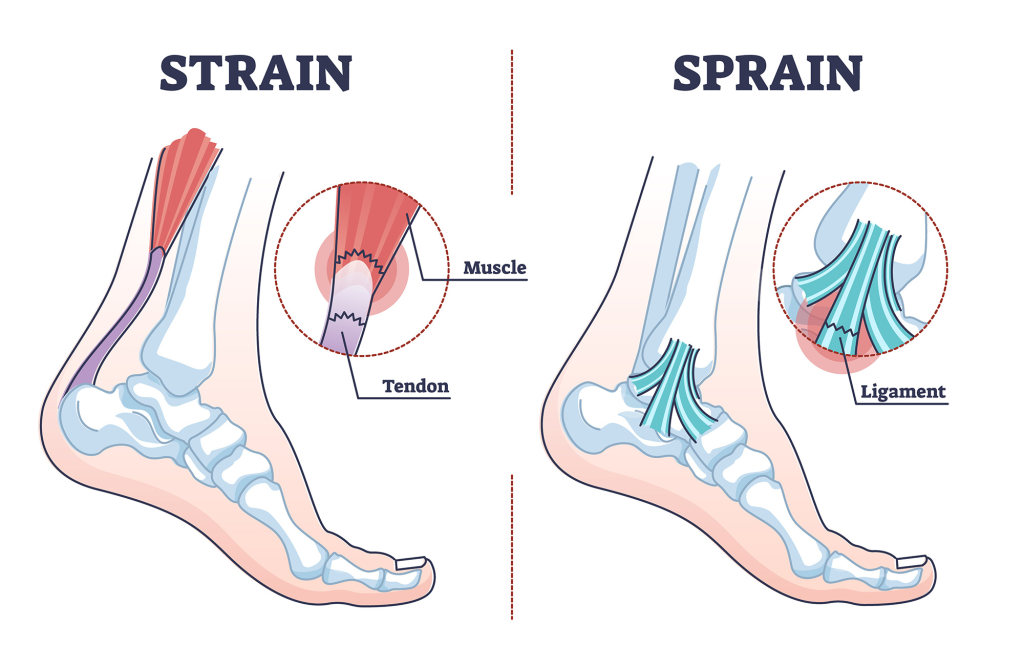
A sprain occurs when a ligament—the tough band of tissue that connects bones—is stretched or torn.
Common causes:
- Rolling an ankle
- Falling on an outstretched hand
- Sudden twists during sports
Symptoms of a sprain:
- Pain around the joint
- Swelling and bruising
- Limited movement or instability
Most common areas: ankle, wrist, knee.
Strain: Injury to a Muscle or Tendon
A strain affects muscles or tendons, the tissues that connect muscles to bones.
Common causes:
- Overstretching a muscle
- Lifting something too heavy
- Repetitive overuse during exercise or work
Symptoms of a strain:
- Muscle pain or cramping
- Weakness in the affected area
- Swelling or spasms
- Trouble moving the muscle normally
Most common areas: lower back, hamstring, shoulder
Fracture: A Break in the Bone
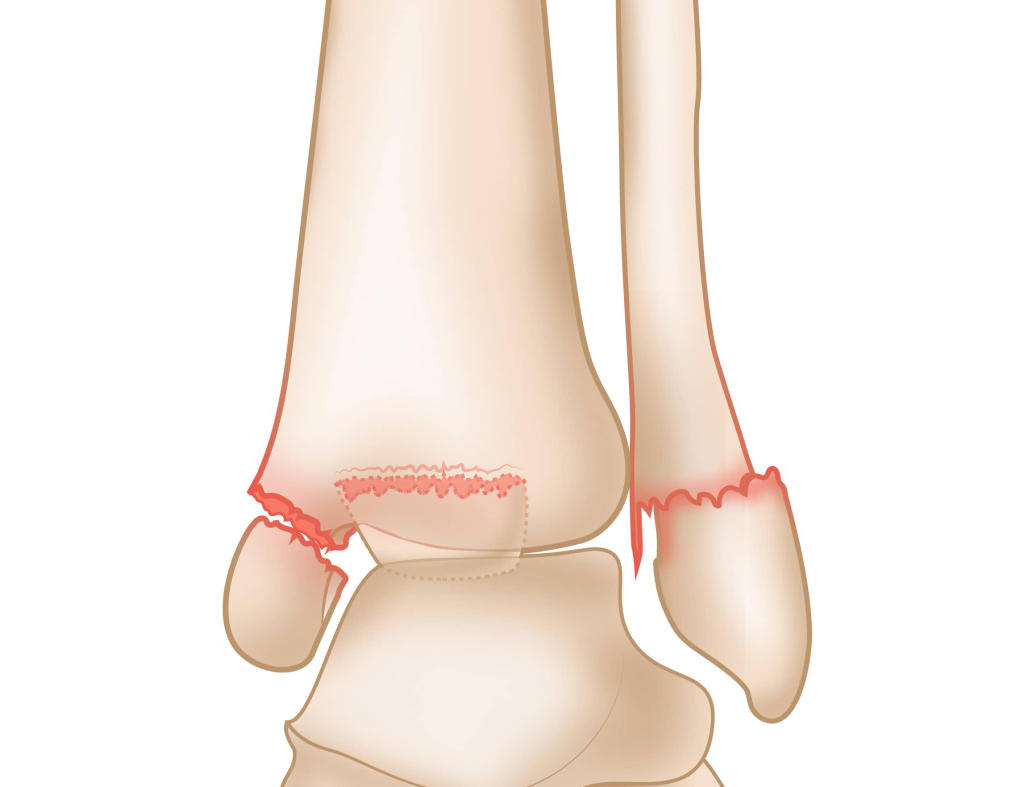
A fracture is a medical term for a broken bone. It can range from a small crack to a complete break.
Common causes:
- Falls
- Sports collisions
- Car accidents
- Severe twisting injuries
Symptoms of a fracture:
- Intense, sharp pain
- Swelling and bruising
- Visible deformity (bone may look out of place)
- Inability to bear weight or move the limb
Fractures usually require immediate medical attention.
How to Tell the Difference
While sprains and strains may heal with rest, ice, compression, and elevation (the R.I.C.E. method), fractures often require immobilization or even surgery. Here’s a quick comparison:
| Injury | Tissue Affected | Symptoms | Severity |
| Sprain | Ligaments | Swelling, bruising, joint instability | Mild–severe |
| Strain | Muscles or tendons | Pain, spasms, weakness, limited movement | Mild–severe |
| Fracture | Bone | Sharp pain, deformity, inability to move | Moderate–severe |
When to See an Orthopedic Specialist
Seek professional care if you experience:
- Severe or worsening pain
- Inability to put weight on the limb
- Noticeable deformity
- Numbness, tingling, or loss of function
An orthopedic specialist can perform X-rays or imaging to determine whether your injury is a sprain, strain, or fracture—and recommend the right treatment for a safe, effective recovery.
Sprains, strains, and fractures share similar symptoms, but they affect different parts of your musculoskeletal system. If you’re unsure about your injury, don’t wait—early diagnosis is key to avoiding long-term complications.
At Montefiore Einstein Orthopedic Surgery, our orthopedic team is here to help you heal and get back to the activities you love. Contact us today to schedule an appointment.