All About “Text Neck”

Smartphones. They’re an incredible invention. They bring us connection to others and to information. They are our alarm clocks, calendars, phone books and more. They definitely make life easier, but with all good things there’s a bit of catch.

Image Credit: Veritas Health

You probably have already experienced it – the need to roll your neck or your shoulders to relieve tightness after looking down at your device for a long time. That gaze down produces undo stress on the spine and neck. In fact, bending your head down 45-60% can put as much as 60 lbs of force on your upper spine. Your neck can not sustain that amount of pressure for long, and that’s when problems can occur – commonly called “text neck syndrome” – which can lead to prolonged spine damage. An evaluation with one of the spine specialists at NEOSM can provide a medical diagnosis and here are symptoms to look out for:

Symptoms of Text Neck Syndrome

  • Pain in the neck, upper back or shoulders
    • This pain can be localized to one specific spot or more broad in the overall area. Pain can also radiate down the spine or arms.
  • Change in posture
    • A shift in your posture with head forward (ears not aligned over the shoulders) or rounded shoulders. This can even lead to balance issues.
  • Pain when Looking Down
    • Increased pain when gazing down to use your device
  • Headache
    • Tension headaches from neck pain are common

Treatment

First step in treating text neck syndrome is to undo the habits that caused the condition to begin with. Raise the phone up to eye level to relieve the pressure on your spine and take breaks from use. Stretch out your neck, shoulder and upper back to ease the muscles. Be conscious of your posture and straighten out when you feel a forward tilt of your head. In addition, to ease pain try sleeping with a cervical pillow to provide additional support. Add neck, shoulder and upper back strengthening exercises to your workouts.

As mentioned, it is best to consult with a spine specialist for an examination and to diagnosis any causes of pain. The team at Northeast Orthopedics and Sports Medicine is here to ensure you receive the highest level of care and attention.

How to Train Like an Olympian

Inspiration is all around us. Watching the winter Olympics, there’s plenty of athletic inspiration to feast our eyes on. Yes, we may not have the time or natural talent to compete at the highest level of sport. But what we’ll find when taking a look at the training habits of the elite athlete, is that there’s a lot we can apply to our everyday physical goals.

TRAINING LIKE AN ATHLETE

Training Team

The professional athlete doesn’t train alone. There’s a team in place to help advise, encourage and support the athlete. Build your team! Consult with your primary physician before you start a new exercise program and stay current with your physicals. Stay on top of unusual aches and pains before they progress into serious issues by reaching out to one of the skilled specialists at Northeast Orthopedics. Bring a friend along to your workouts to help you stay accountable. Reach out to others with the same athletic goals as you on social media and join a community. Your team is out there waiting to support your journey.

Diet/Hydration

When you’re an athlete in training, your body needs a lot of fuel. That’s why diet is so important. Fuel your body with enough carbs to provide energy and protein to support muscle growth. And don’t forget the importance of hydration. Aim for drinking half your body weight in ounces per day. If you’re new to consuming a lot of water, start at a tolerable level and build up your intake each week.

Strength Training

You may think strength training is only for sports that require a lot of power, but building muscle strength is key for endurance sports as well. Strong muscles create an overall structure that is less prone to injury. For the non-professional athlete, a strong frame makes you less vulnerable to falls and related injuries.

Rest/Recovery

Every professional athlete knows the importance of rest/recovery days. Taking a break from intense training allows the body the opportunity to heal and make the next training session more effective. At home, rest days can look like a leisure walk instead of a HITT cardio class, or some simple yoga flows rather than hitting the weights hard.

Sleep

We’ve all experienced sleepless nights and the feeling of uselessness the following day. Imagine being sleep deprived and expecting your body to perform at an Olympic level. It’s a recipe for injuries to occur. That’s why top athletes prioritize sleep, and so should you. Restfulness isn’t something your body would like to have, it’s something it needs in order to allow healing and restoration.

Your level of training may not mirror that of an Olympian, but the formula is there for your success. And, as always, the providers of NEOSM are there to support you all the way!

All About Osteoporosis

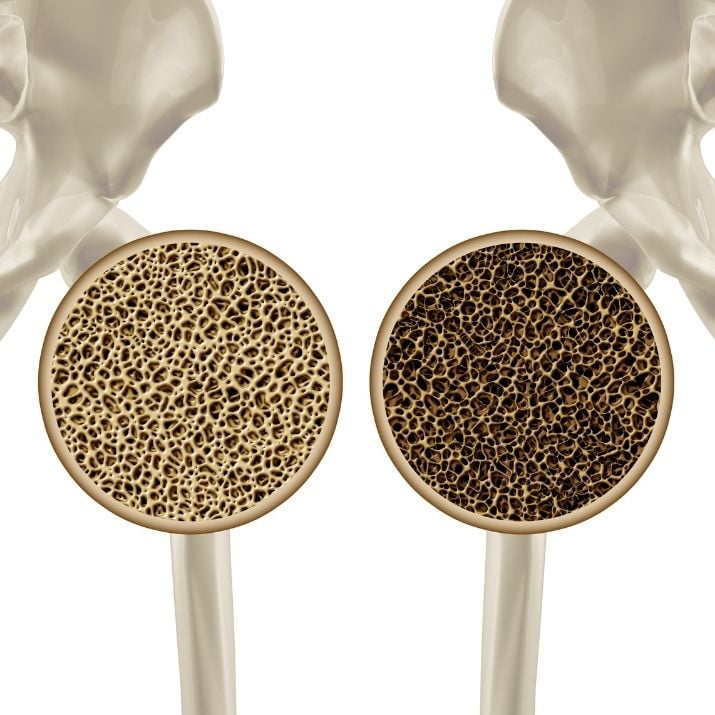
Did you know your bones are continually remodeling? Small amounts of bone tissue are absorbed by the body while small amounts are replaced. When more bone is lost than replaced, the density of the bones diminishes, weakening the bone structure. This condition is called osteoporosis and is the reason for over 2 million related fractures each year. There are ways these can be avoided and treated. In this post, we share how.

Healthy Bone v. Osteoporosis

What Causes Osteoporosis?

There are many risk factors that lead to increased bone loss. Family history and age are catalysts for a physician to prescribe a bone density test. Other factors include physical health/strength and excessive smoking or alcohol intake.

Higher risk for women over 35: Generally women are prone to lose more bone mass than men as their age, particularly during menopause, when bone loss is accelerated. It’s important to speak to a primary physician or gynecologist for recommended treatment to preserve bone mass.

How to Prevent Osteoporosis and Related Fractures?

Strong body means strong bones and good balance prevents falls, so engaging in even simple training exercises on a regular basis will reduce your risk of fractures.  Try weight-bearing activities like sit-to-stand exercises, walking or hiking, or stair climbing. Balance drills like standing on one leg (using a chair for support) and bending down then back up. Yoga and Tai-chi are also great activities to include in your routine. Along with adding regular exercise to your week, ceasing smoking and limiting alcohol consumption are key to preventing bone loss. These lifestyle changes allow your body to better support bone building cells.

How is Osteoporosis Treated?

Aside from fracture prevention methods detailed above, medications are available to help decrease the amount of bone being lost. Through testing, a physician can determine your bone strength level and prescribe a treatment accordingly. Medications include different hormone therapies and twice-yearly injections. These methods focus on suppressing ongoing loss, not restoring lost bone – therefore good prevention methods are paramount to curbing osteoporosis.

The strength of our bones, especially as we age, can make all the difference in the quality of life we lead. We hope you incorporate good habits into your everyday life to prevent unnecessary fractures. The specialists at NEOSM are here to support you when you need us.

NEOSM Partners with Montefiore

Northeast Orthopedics & Sports Medicine is proud to announce our partnership with Montefiore Health System. We’re excited to provide the same level of exceptional care to our patients with the support of Montefiore. Read the press release below to learn more. For patient FAQs, click here.


NORTHEAST ORTHOPEDICS AND MONTEFIORE ORTHOPEDICS PARTNER TO ENHANCE SERVICES AND CARE IN THE HUDSON VALLEY

NEW YORK (December 15, 2021) – Northeast Orthopedics & Sports Medicine, whose clinicians are renowned for providing personalized and compassionate orthopedic care to people across the Hudson Valley for over 30 years, has partnered with Montefiore Orthopedics, to enhance services and access to patients with complex care needs.

As of December 2021, Northeast Orthopedics & Sports Medicine (NEOSM) and Montefiore Orthopedics will together offer traditional orthopedic services, including joint replacement surgery, rheumatic care, pain management services and sports medicine, across the nine NEOSM offices, and subspecialists from Montefiore, including pediatric orthopedic surgeons and tumor specialists, will now also be part of the enhanced care teams.

“The doctors at Northeast Orthopedics and Sports Medicine have proudly provided our patients with advanced, cutting-edge comprehensive musculoskeletal care throughout many specialty areas for over 30 years,” said Doron Ilan, MD, Orthopedic Surgeon and President of NEOSM. “We are thrilled to combine our efforts with Montefiore in a partnership that builds upon NEOSM’s position as a leader in orthopedics and further enhances the level of care in our community.” 

NEOSM is the largest orthopedic practice in the lower Hudson Valley and Montefiore Orthopedics is nationally ranked as high performing by U.S. News & World Report in its Best Hospitals list. Combining their strengths, 20 NEOSM physicians are now part of Montefiore’s Department of Orthopedic Surgery and the expanded team of board-certified, fellowship-trained orthopedic specialists will be better equipped to serve a broad range of health needs in the community.

“Northeast Orthopedics & Sports Medicine has long been recognized as a leader in providing advanced musculoskeletal care to people in Westchester, Rockland and Orange counties,” said Neil J. Cobelli, MD, Professor and University Chairman, Montefiore Department of Orthopedic Surgery and Albert Einstein College of Medicine. “We are delighted to bolster the NEOSM team and together offer sophisticated, evidence-based therapies to patients across the region.”

For more information about the new partnership, please visit: https://monteortho.org/partnership-faqs


About Montefiore Health System

Montefiore Health System is one of New York’s premier academic health systems and is a recognized leader in providing exceptional quality and personalized, accountable care to approximately three million people in communities across the Bronx, Westchester and the Hudson Valley. It is comprised of 10 hospitals, including the Children’s Hospital at Montefiore, Burke Rehabilitation Hospital and more than 200 outpatient ambulatory care sites. The advanced clinical and translational research at its medical school, Albert Einstein College of Medicine, directly informs patient care and improves outcomes. From the Montefiore-Einstein Centers of Excellence in cancer, cardiology and vascular care, pediatrics, and transplantation, to its preeminent school-based health program, Montefiore is a fully integrated healthcare delivery system providing coordinated, comprehensive care to patients and their families. For more information, please visit www.montefiore.org. Follow us on Twitter and view us on Facebook and YouTube.

About Northeast Orthopedics & Sports Medicine

Northeast Orthopedics & Sports Medicine (NEOSM) is the largest orthopedic practice in the lower Hudson Valley, with 9 locations within Rockland, Orange & Westchester Counties and 20 physicians. The specialized team of physicians at NEOSM have been providing quality, advanced musculoskeletal and related care in a compassionate and caring manner for over 30 years. With specialists in general orthopedics, sports medicine, joint replacement, hand surgery, foot & ankle surgery, pain management, orthopedic trauma, joint replacement, spinal care and rheumatology, NEOSM utilizes a comprehensive approach to care while applying the latest advances in medicine and surgery. Learn more at NEOSMteam.com.

NEOSM/Montefiore Partnership FAQs

Northeast Orthopedics and Sports Medicine (NEOSM) is proud to announce that we are now part of the Montefiore Health System! Through this partnership, NEOSM will continue providing the highest level of care to our community with the support and resources of Montefiore. We are excited for this new affiliation and the opportunities for enhanced care it provides.

Naturally, questions arise as to the impact of this new relationship, but rest assured, most patient experiences will remain the same. We’ve addressed what we anticipate to be common questions below. We hope the following information is helpful, but should you have additional questions, feel free to call our office to speak with a staff member.

Will all NEOSM locations remain open?

Yes! All nine NEOSM locations are still open and accepting patients. Click here for a list of locations and contact information.

Will my provider still be at NEOSM?

Yes, they will. All 20 physicians, 2 Nurse Practitioners and 6 Physician Assistants are practicing from our offices. Click here to learn more about our highly-talented team.

I have surgery scheduled. Will it still take place at the same facility?

Yes. No changes have been made to where our surgeons perform their procedures. Follow your surgical instructions as provided.

I have an upcoming appointment. Do I need to call to reschedule?

Nope, not at all. All appointments will continue as normal.

Will you be accepting my insurance?

NEOSM accepts most forms of insurance. Speak with one of our offices to see if your plan is included.

Who will be billing me: NEOSM or Montefiore?

You will start to see patient invoices for NEOSM on Montefiore letterhead. Be sure to remit as indicated on the invoice.

Are you still called Northeast Orthopedics and Sports Medicine?

For now, yes. Though a name change may be in our future.


Thank you for being a valued patient and for your continued support. We’re thrilled to continue to be your orthopedic practice of choice!

How to Prepare for Your Orthopedic Visit

Whether you are scheduled for a consultation or in need of immediate medical care, the providers at Northeast Orthopedics & Sports Medicine are committed to making sure you leave our office knowledgeable and comfortable with your treatment. With a little preparation from patients, we can ensure all visits are effective in this way. Here is our recommended plan for you to get the most from your orthopedic appointment:

What to Bring

  • Before your visit, be sure to gather all information and documents that may be pertinent to your case. Remember your insurance card or any necessary referrals.  
  • If you have x-rays/imaging, lab tests or medical records from other doctors relating to your issue, bring them with you to your appointment.
  • Make a list of any medications or supplements you are currently taking.
  • Have your medical history handy, including dates of any prior surgeries, medical conditions or allergies.
  • Are there specific questions on your mind? It’s best to jot them down and bring them to your office visit to ensure they are answered.

Appointment Day

  • Your provider will need to examine the area where you require care, so consider this when dressing for your appointment. You may want to wear clothes that are comfortable to remove if needed.
  • We ask that you try to arrive 15 minutes prior to your appointment time, so our front desk can ensure all your paperwork is in order and you are properly checked-in.
  • When you meet with your provider please be honest and forthcoming, even if you may feel some details are unimportant or as though they may embarrass you. It’s vital for our care team to have all information related to your case in order to provide appropriate treatment plans.
  • Don’t forget to ask the questions you brought with you and any that may come up during your appointment. Our providers want you to feel comfortable with your course of care, so please ask away!
  • We encourage you to take notes during your visit. A lot of details may be discussed, so you don’t want to rely on memory alone. Be sure to include information like: pre/post-surgery instructions; bandage or cast care do’s & don’ts; and what new symptoms may require an immediate call to your doctor.

We hope by reading through these tips, you will feel prepared and comfortable for your appointment. Remember, the providers and staff at NEOSM are always here to answer questions. Just give us a call.

Hudson Valley Top Doctors 2021

It is with great pride that we announce the NEOSM physicians named to Hudson Valley magazine’s Top Doctors list for 2021. Congratulations to the following doctors for the acknowledgement of their tireless commitment to their patients.

Orthopedic Surgery

William Davis Jr, MD
Barry Kraushaar, MD
Mark Medici, MD
Patrick Murray, MD
Steven Renzoni, MD
Richard Semble, MD
Jordan Simon, MD

Physical Medicine & Rehabilitation

Michael Robinson, MD

Rheumatology

Shivani Purohit Mehta, MD

Sports Medicine

Richard Popowitz, MD

Congratulations to you all! If you’d like to make an appointment for consultation with one of our talented physicians, please call an office near you.

The Rise of One-Sport Injuries

As a parent, it’s easy to go “all-in” on a sport your child really enjoys or excels in. But studies are showing that playing the same sport for three or more seasons of the year is resulting in a spike in overuse injuries in young athletes. While sudden trauma injuries are immediately apparent, overuse injuries appear gradually and can be easy to miss. What can you do to prevent serious injury if your son or daughter has become a “one-sport” athlete and how do you spot trouble? The American Academy of Orthopaedic Surgeons (AAOS) and the American Orthopaedic Society for Sports Medicine (AOSSM) have created The One-SportTM campaign to answer that question and to guide parents and coaches.

Preventing Injuries

Following the guidelines below will help kids get the most out of their sport while reducing risk of injury.

PHYSICAL – It’s a good idea to have your child visit their doctor for a physical before their season starts to screen for, diagnose and treat any conditions.

WARM UP & COOL DOWN – Gradually increasing the heart rate before exercise and allowing a gradual decrease after is important. During warm up and cool down, give a proper amount of time to stretch muscles gently.

HYDRATE– Taking a water break at least every 30 minutes (or more often depending on weather and activity) is key to preventing cramps and muscle spasms.

PROPER EQUIPMENT – Always use proper equipment when participating in a sport. Be sure all gear fit well, are in good condition and are checked on a weekly basis.

GRADUAL TRAINING INCREASE & INSTRUCTION – You wouldn’t jump in the deep end at your first swim lesson for the same reason you shouldn’t train to extremes from the start. Allow your child to gradually increase the intensity of their training as their skills and strength grow. Look to coaches and trainers for guidance on correct form and appropriate exercises suited to your athlete’s ability.

BREAKS AND REST – The most important lesson to teach kids during training is how to listen to their bodies and take a break when necessary. Until they learn how, adults should encourage scheduled rests during training or competition, plus rest days during the week to allow their bodies to recover.

Spotting Trouble

Don’t miss the signs of overuse. Early action can prevent long term effects on performance or quality of life. Take action if you notice any of the following:

  • Isolated pain when using a body part
  • Sleep disruptions
  • Preference to put weight on one side of the body rather than another
  • Numbness or tingling in extremities
  • Headaches during or after training or competition
  • Stiffness in joints or muscles
  • Unusual weakness
  • Presence of blisters or irritate skin

If you see the presence of any of these signs, call one of our orthopedic and sports medicine specialists as soon as possible. With early evaluation and intervention, you can prevent injuries that can have life-long implications.

For more information on The One-SportTM campaign, visit www.stopsportsinjuries.org.